
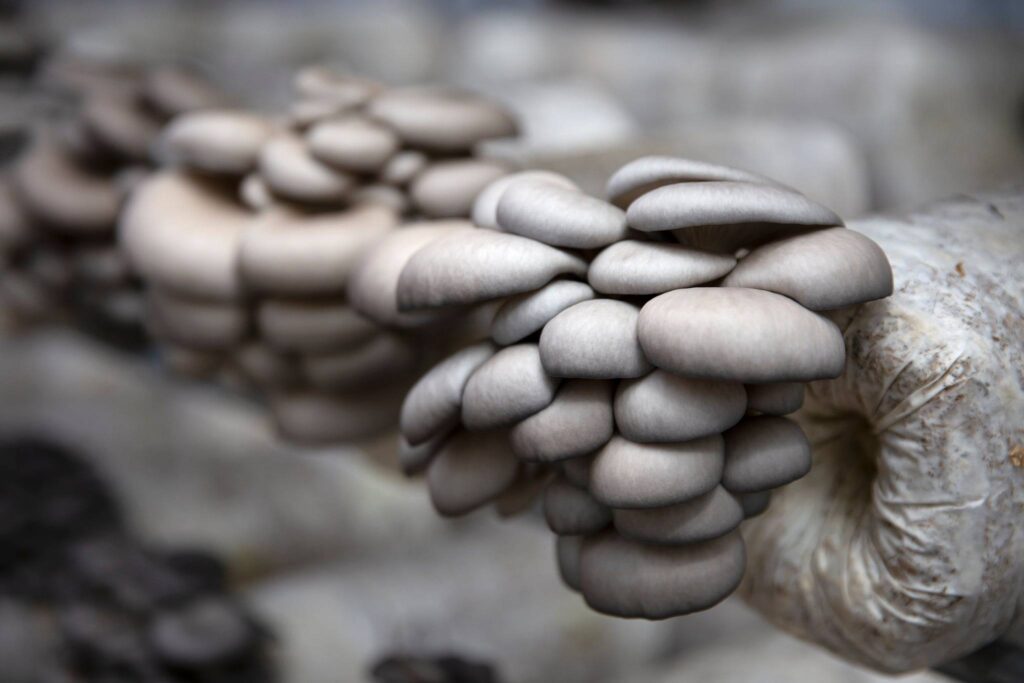
Growing oyster mushrooms (Pleurotus ostreatus) indoors is a science, not just a hobby. While many beginners start with a regular domestic air conditioner, they quickly face failures: small caps, long stems, cracked surfaces, or even complete contamination.
The truth is, oyster mushrooms have very different environmental demands from human comfort. A dedicated oyster mushroom air conditioner is not a luxury – it is the backbone of a profitable commercial farm.
The 3 Critical Parameters That a Regular AC Cannot Handle
- Humidity: The Hidden Enemy
Regular air conditioners dehumidify as they cool. For humans, that is great. For oyster mushrooms, that is a disaster.
· Oyster mushroom requirement: 85–92% relative humidity (RH) during pinning and fruiting.
· What a regular AC does: Pulls RH down to 40–60% in minutes.
· Result: Mushrooms dry out, caps crack, and growth stalls.
A specialized mushroom air conditioner integrates ultrasonic humidifiers or high-pressure misting to maintain stable RH without wetting the substrate.
- CO₂ Control – The Most Overlooked Killer
Oyster mushrooms consume oxygen and release CO₂ rapidly. At the pinning stage, CO₂ should be below 600 ppm. During fruiting, keep it under 1000 ppm. Above 1200 ppm, you get “long stem, small cap” deformity – commercially worthless.
A regular AC has no CO₂ sensor or fresh air exchange logic. A dedicated unit includes:
· Built-in CO₂ sensors
· Automatic fresh air damper (up to 30% outdoor air)
· Exhaust fan coordination to flush out accumulated CO₂
- Fruiting Body Temperature vs. Room Temperature
Oyster mushrooms produce their own metabolic heat. A regular AC measures air temperature, not the core temperature of the substrate blocks. This leads to overcooling or undercooling.
Specialized mushroom AC units use remote bulb sensors placed inside the growing bed or on the substrate surface, ensuring the actual fruiting temperature stays between 15–22°C (depending on strain).
Common Failure Examples (Real Farm Scenes)
Problem Likely Cause Solution:
Long, thin stems, tiny caps High CO₂ (>1200 ppm) Add fresh air exchanger
Cracking cap surface Low RH (<70%) Install industrial humidifier Yellowish, water-soaked appearance Temperature too high (>25°C) Increase cooling capacity
Green mold contamination Poor air circulation + high temp Balance airflow and cooling
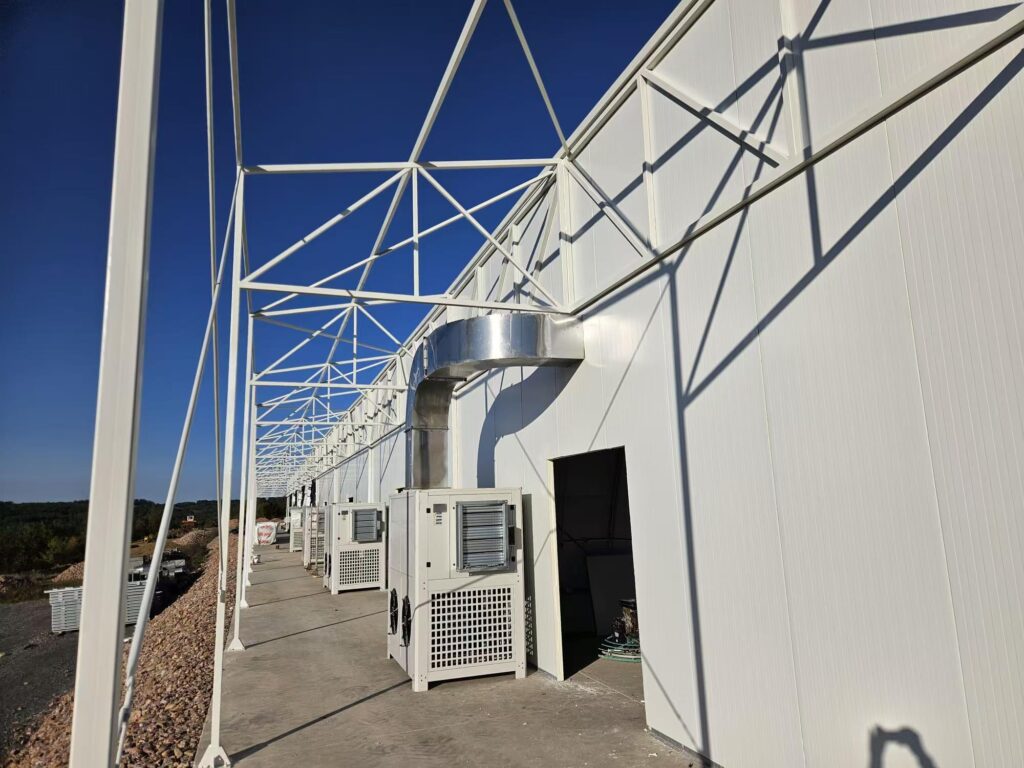
What to Look for in a Commercial Oyster Mushroom Air Conditioner?
If you are sourcing for your farm or supplying to mushroom farms, here is the technical checklist:
- Cooling capacity: 8kw ~ 90kw as requirement
- Integrated humidifier: Ultrasonic with humidity control loop.
- CO₂ management: Digital sensor + automatic fresh air mixing damper.
- Frost protection: Evaporator coil designed for high humidity (anti-corrosion coating).
- Remote monitoring: 4G/WiFi module to track temperature, humidity, CO₂ from your phone.(option function)
Why Upgrade to a Dedicated Oyster Mushroom Air Conditioner?
· Yield increase: From 15–20% biological efficiency to 25–30% (real data from farms).
· Reduce deformity rate: From 30% down to under 5%.
· Lower electricity bill: Optimized compressor cycling vs. overworking a regular AC.
· Less contamination: Stable environment = less stress on mycelium = stronger resistance to Trichoderma.
Ready to optimize your oyster mushroom climate? Contact us for a free offer.
