
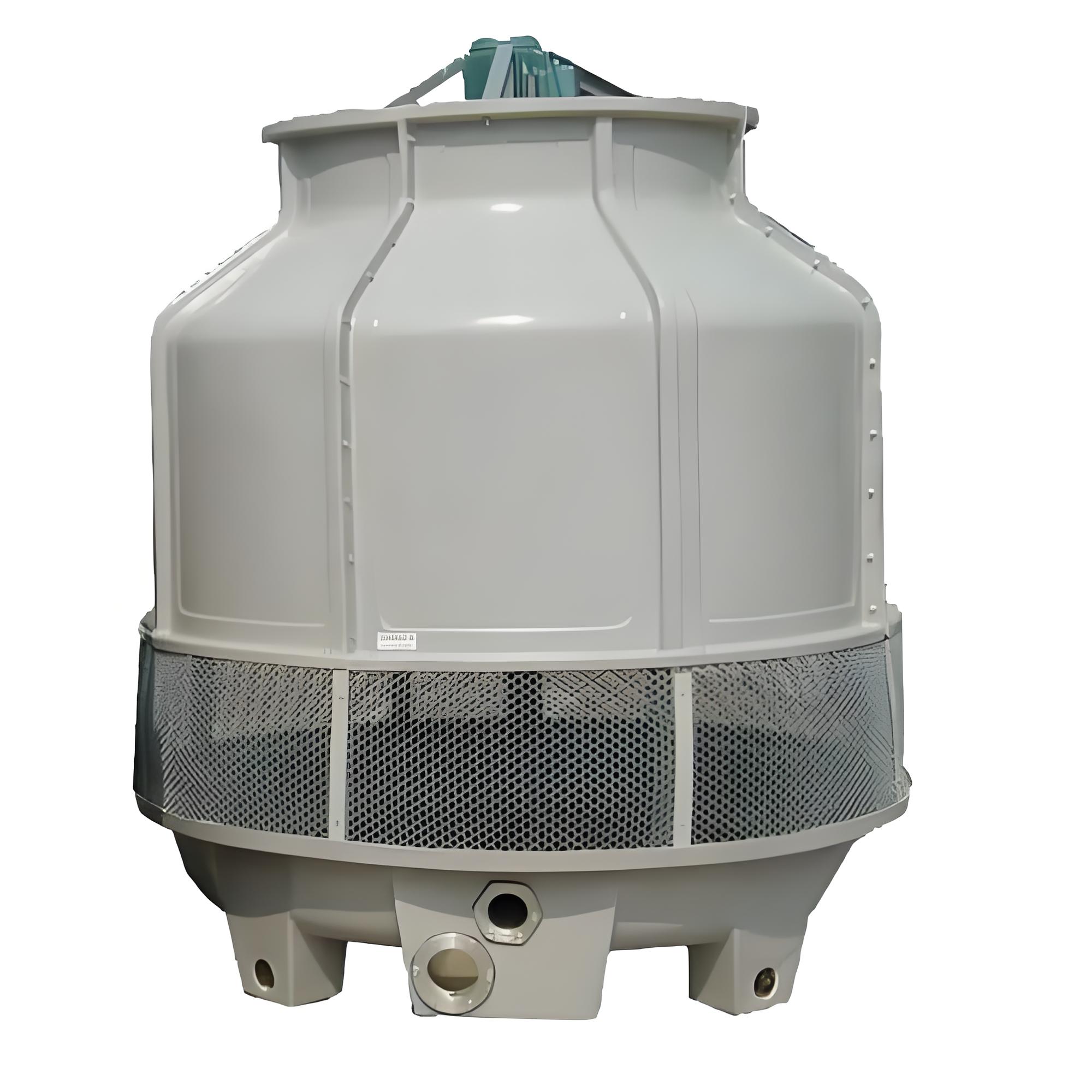
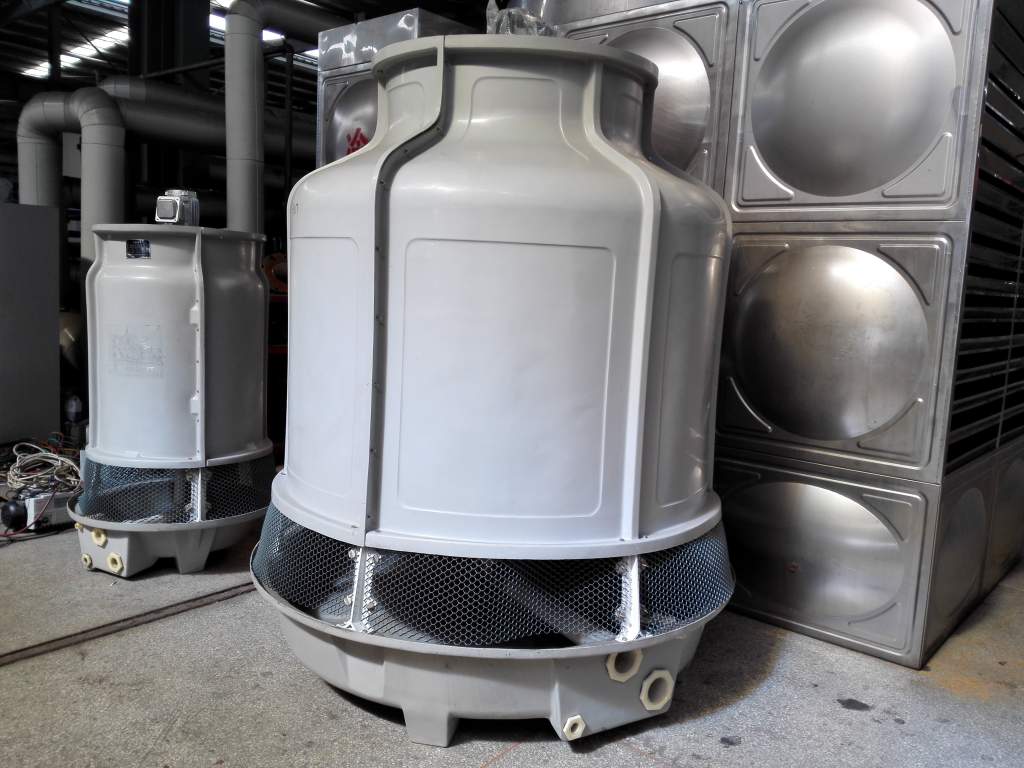
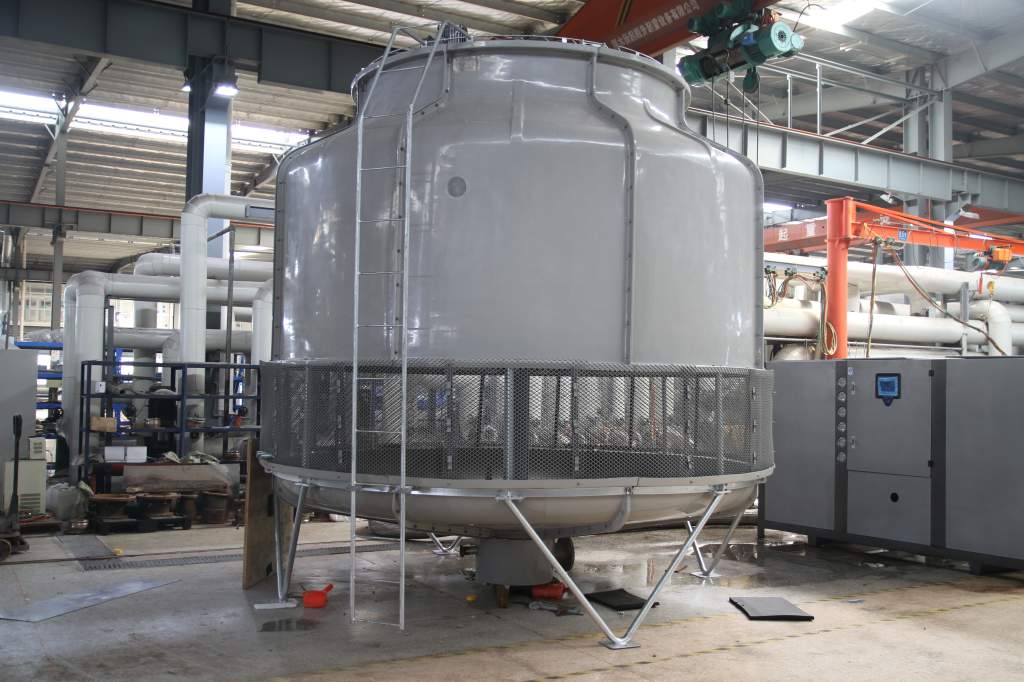
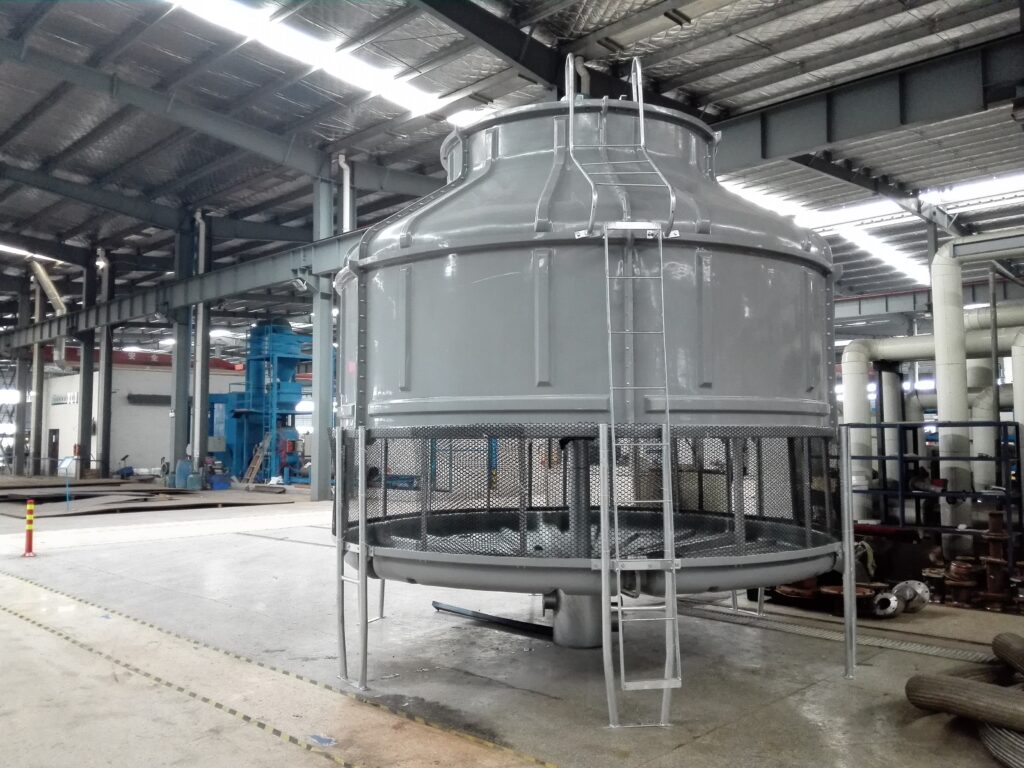
Cooling tower
Cooling tower is used for cooling water,it normally working with a water cooled chiller for the cooling system.
1. Material
An FRP (Fiberglass-Reinforced Plastic) cooling tower is primarily constructed from glass fiber reinforced plastic for its shell, casing, fan stack and water basin . This material offers:
· Lightweight & High Strength: Easier to install and structurally sound .
· Corrosion Resistance: Withstands water treatment chemicals, chlorides, and salt air without rusting (unlike metal towers) .
· Durability: Often includes UV-stabilized resins and gel coats for long outdoor life .
2. Applications
Cooling towers are widely used to reject excess heat from industrial processes and HVAC systems :
· Industrial: Cooling water in power generation, chemical plants, petrochemical refineries and steel mills .
· Commercial HVAC: Cooling condenser water for large air conditioning systems in buildings .
· Specialized Environments: Marine/offshore applications due to their corrosion resistance to salt air .
3. Operating Principle
Cooling towers are evaporative heat exchangers. The principle involves hot water coming into direct contact with air to be cooled .
· Water Distribution: Hot water (e.g., 37°C) is pumped to the top and sprayed through nozzles over a fill (packing) . The fill increases the contact surface area, breaking the water into small droplets or thin films .
· Airflow: A fan (usually induced-draft axial type) draws air from the bottom or sides, moving it upward (counterflow) or horizontally (crossflow) through the falling water .
· Heat Transfer: As the air passes the water, heat is removed via two mechanisms :
1. Evaporation (Predominant): A portion of the water evaporates, absorbing large amounts of latent heat. This accounts for 60-90% of the total cooling .
2. Sensible Heat Transfer: Cooler air directly conducts heat from the warmer water.
· Cooling Result: The heat is carried away by the moist air, and the cooled water collects in the basin at the bottom for recirculation (e.g., cooled from 37°C to 32°C) . Drift eliminators capture water droplets to minimize water loss .

Reviews
There are no reviews yet.